PVC vs Timber Plantation Shutters — Which Is Best for NZ Homes?

PVC or timber shutters — which should you choose?

PVC and timber plantation shutters look identical once installed and operate in the same way. The choice is therefore less about appearance or operation and more about material preference, moisture resistance, durability, window size and price

Across our shutter range, options include EcoSmart PVC shutters, Paulownia timber shutters and Basswood timber shutters, along with SUPASPAN, a specially engineered Basswood shutter designed for larger windows and wider panels

Some homeowners simply prefer the idea of real timber, while others value the practicality of PVC. This guide explains the differences that actually matter so you can work out which material best suits your New Zealand home

Ambassador
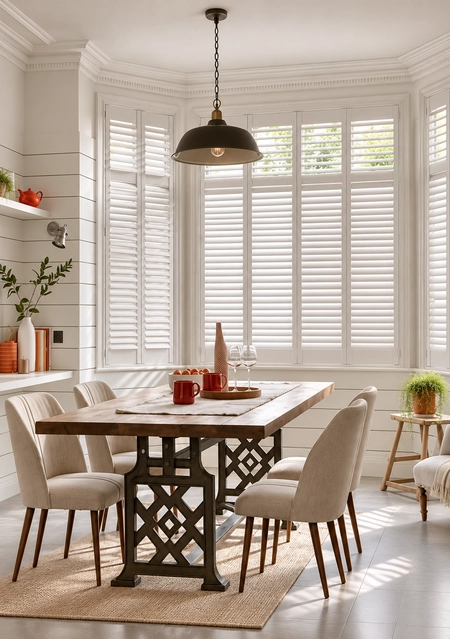
White plantation shutters in a bright dining room showing their finished appearance

PVC vs timber shutters — the key differences


Once installed, PVC and timber plantation shutters look and operate the same. The real differences are in the material itself and where each option performs best

PVC shutters are particularly practical in bathrooms, laundries and other moisture-prone areas. They’re durable, easy to maintain and generally the more economical option

Timber shutters appeal to homeowners who prefer a natural wood product. Paulownia provides a lightweight, economical timber option, while Basswood is a harder timber and better suited where the shutters may take the occasional knock

For very large windows, our SUPASPAN shutters allow wider individual panels — which can sometimes mean fewer panels across an opening and a cleaner overall look

There’s no single winner for every home — the best choice depends on the room, window size, budget and your preference for PVC or real timber

For full specifications, options and pricing, see our plantation shutters page

When are PVC plantation shutters the better choice?


PVC plantation shutters are particularly well suited to moisture-prone areas
such as bathrooms, ensuites and laundries. Unlike timber, PVC isn’t affected by moisture in the same way, making it a practical choice where condensation or humidity is common

PVC is also one of the more economical shutter options, making it a strong choice where you want the plantation shutter look and performance without paying extra simply for a timber material

Once installed, PVC shutters look and operate the same as timber shutters, so choosing PVC doesn’t mean compromising on the finished appearance

Where regular damp conditions are likely, PVC is the material we recommend

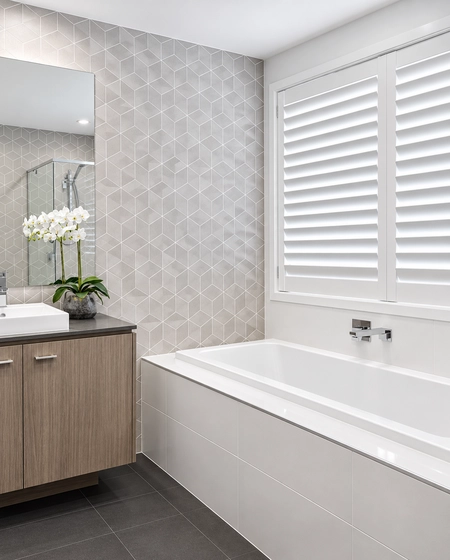
White PVC plantation shutters fitted above a bath in a modern bathroom
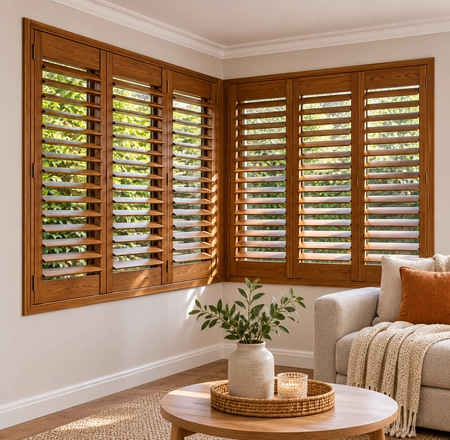
Stained timber plantation shutters fitted across corner windows

When are timber plantation shutters the better choice?


Timber plantation shutters are a great choice if you prefer a natural wood product
rather than PVC. Once painted and installed, they look and operate the same — the difference is primarily what the shutter is made from

Our timber options include Paulownia and Basswood. Paulownia is lightweight and an excellent everyday shutter timber, while Basswood is harder and better able to resist dents and knocks

For living areas, bedrooms and other dry spaces, either can be an excellent choice — particularly if having a genuine timber product matters to you

Why do we use solid timber rather than MDF or composite shutters?


Not all shutters sold as “wood” or “timber” are actually made from solid timber. Some use MDF or wood-composite cores, manufactured from wood fibres combined with binders or adhesives and then covered with a protective outer finish

For our timber shutters, we prefer solid Paulownia or Basswood. They have the natural structure and integrity of real timber throughout the shutter rather than relying on a manufactured composite core beneath the surface

That distinction can also matter around moisture. MDF and wood-composite materials rely heavily on their protective coating — if that surface is damaged and moisture reaches the core, the material can absorb it, potentially compromising the shutter’s structural integrity

That doesn’t mean composite shutters have no place, but when we describe our shutters as timber shutters, we prefer them to actually be made from genuine timber

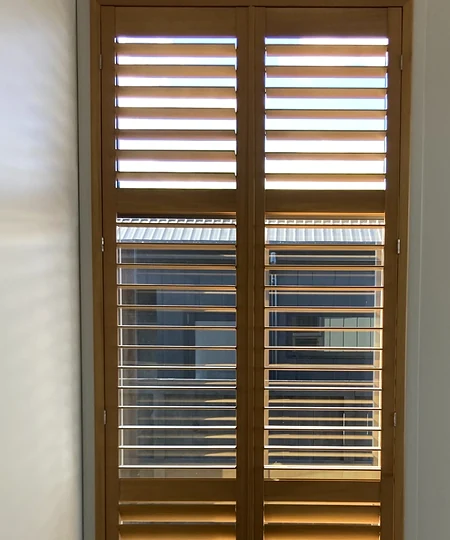
Close-up of genuine stained timber plantation shutters showing the natural wood finish
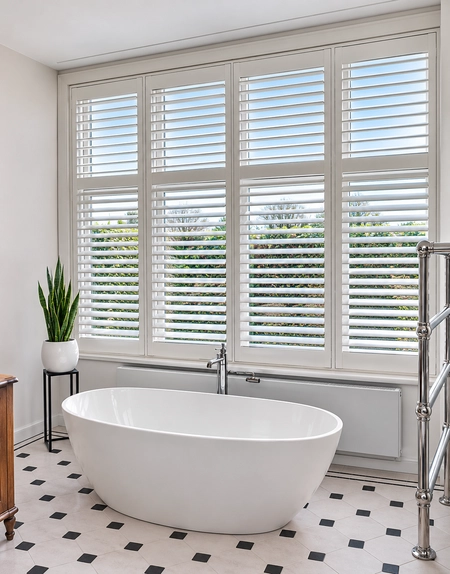
White pvc plantation shutters above a freestanding bath in a bright bathroom

Which shutters are best for bathrooms and wet areas?


For bathrooms, ensuites, laundries and other moisture-prone rooms, PVC shutters are the best choice

In a normally ventilated bathroom, standard PVC shutters are generally all that’s required. Where a room is poorly ventilated, regularly damp, or the shutters may come into direct contact with water, we can upgrade the specification with an exterior-grade paint finish, stainless steel hinges and adjustable panel feet instead of magnetic catches

That gives the shutters extra protection in genuinely wet environments while keeping the same clean plantation shutter look

Timber shutters are better reserved for drier rooms where moisture isn’t a regular concern

Do PVC shutters look different from timber shutters?


With a painted finish, PVC and timber plantation shutters look identical once installed. They use the same shutter styling, louvres and coated finish, so you can’t tell which material is underneath just by looking at them

If you prefer timber, the reason is usually the material itself rather than any visible difference in the finished shutter. Once painted and installed, both PVC and timber give you the same clean plantation shutter look

The exception is if you specifically want a stained timber finish, where the natural grain of the wood becomes part of the look

Because the painted finishes match, there’s no problem using PVC shutters in some rooms and timber shutters in others. You can simply choose the material that best suits each room, your preference and your budget, while keeping a consistent look throughout the home

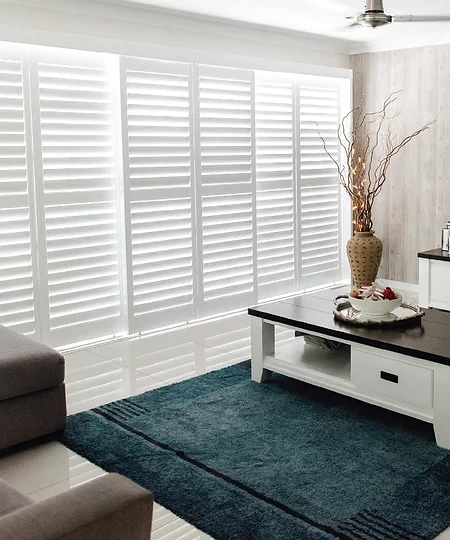
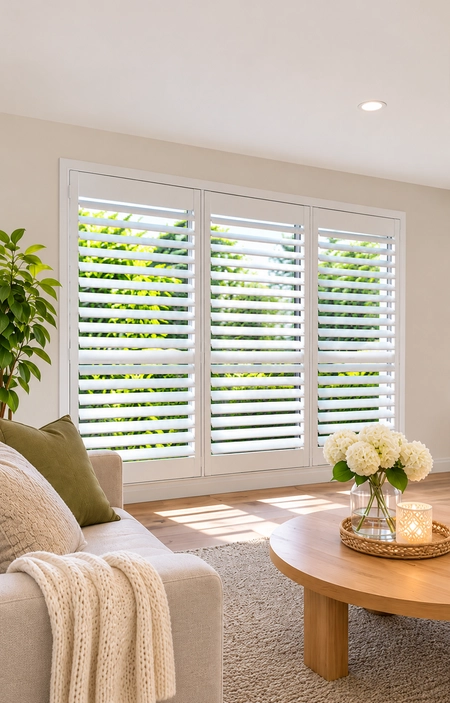
Painted white plantation shutters in a living room showing their finished appearance
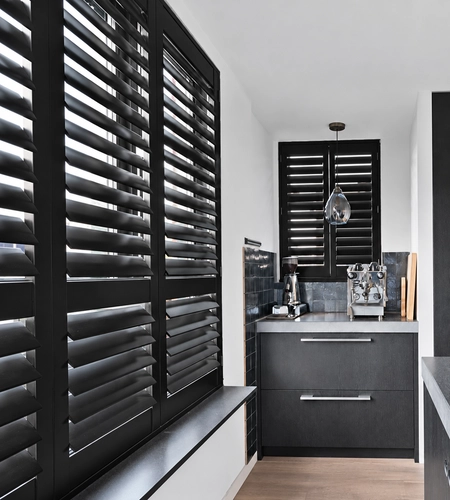
Black timber plantation shutters in a contemporary kitchen

What about black or dark-coloured shutters?


If you want black or dark plantation shutters, timber is the better choice

Dark colours absorb more heat, so we don’t recommend and won’t supply black PVC shutters, as the heat build-up will increase the risk of movement or distortion over time

Timber shutters can be finished in black or other darker colours, while stained timber can also bring the natural grain into the design

So if a dark or custom-coloured shutter is part of the look you’re after, timber is the material we’ll steer you toward

What about shutters for very large windows?


For particularly large windows and openings, SUPASPAN shutters give us another option beyond our standard PVC and timber ranges

SUPASPAN uses a specially reinforced Basswood construction that allows us to make wider individual shutter panels. Because SUPASPAN panels can be made wider, larger openings can often be covered with fewer shutter panels — giving the finished installation a cleaner, less interrupted, more architectural look

It isn’t necessary for most standard windows, but for larger openings where panel width starts to matter, SUPASPAN can give us considerably more design flexibility

It’s a premium option, so we only use it where the size and layout of the opening genuinely benefits from it

Wide supaspan plantation shutter panels fitted across a large window opening
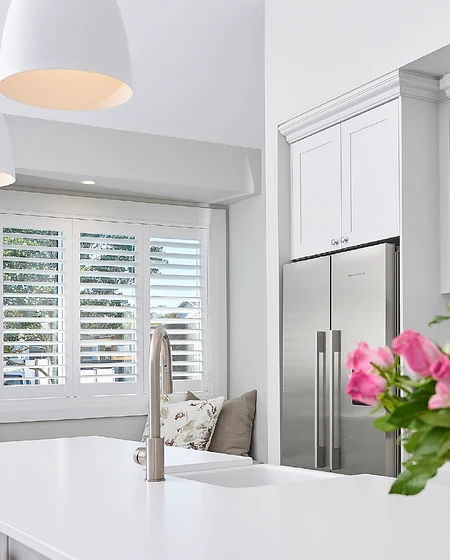
White plantation shutters in a bright modern kitchen

Are PVC shutters cheaper than timber shutters?


Often, but not always. PVC is one of our most economical shutter options, while Basswood then SUPASPAN sit at the more premium end of the range

In some areas, our Paulownia timber shutters can be priced the same as PVC, so choosing timber doesn’t necessarily mean paying more

The final price also depends on the window size, panel layout, material and any special requirements, so we quote each job on its actual configuration rather than relying on a simple square-metre comparison

You don’t need to work all of that out yourself — we’ll guide you toward the most suitable and economical shutter option for your windows, location and preferences

The important point is that material choice can affect price — but it isn’t the only factor

Which shutter material should I choose room by room?


Bathrooms, ensuites and laundries
— PVC is the safest choice because of its moisture resistance and easy-care finish

Bedrooms and living areas — either PVC or timber can work beautifully. This often comes down to personal preference, budget and whether you specifically want a genuine timber product

Kitchens — PVC is particularly practical where steam, moisture or regular cleaning are considerations, although timber can still work well in suitable drier areas

Large windows and openings — standard PVC or timber may both be suitable, while SUPASPAN is the option where individual shutter panels need to be wider than our standard timber limit — over 950mm and up to 1300mm wide per panel

There’s no need to use the same material throughout the entire home — we can match the shutter material to each room while keeping a consistent finished look throughout

White plantation shutters fitted to a window and larger opening in a living area
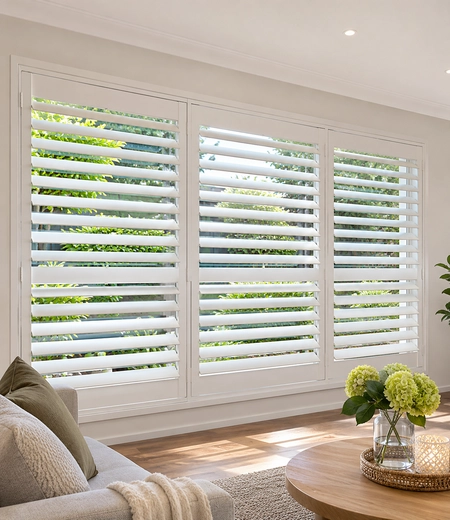
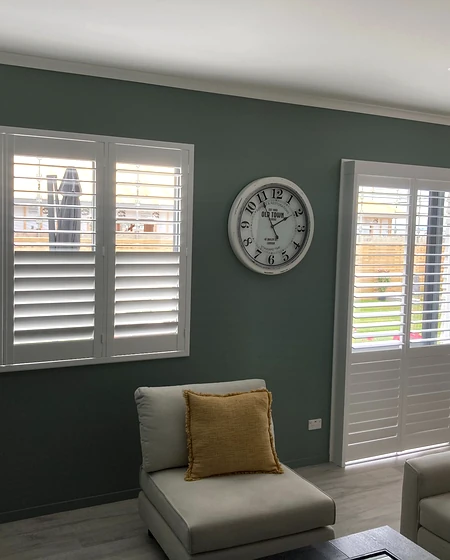
White plantation shutters in a modern New Zealand living room

PVC or timber plantation shutters — our bottom line


There isn’t one shutter material that’s best for every home

Choose PVC shutters where moisture resistance, easy maintenance and value are the priorities. Choose timber shutters if you prefer a genuine wood product, want darker or stained finishes, or simply like the idea of real timber

For larger openings, SUPASPAN shutters allow us to use wider individual panels, which can reduce the number of panels overall to create a cleaner look

And remember, you don’t have to use the same material throughout the house. We can match the shutter type to each room's needs while keeping the finished look consistent

For further specifications and information, see our plantation shutters page — or send through the overall width and drop of your windows and we’ll put together a prompt, meaningful quote

SHUTTERS PAGE

SHUTTERS FAQS

GET A QUOTE

TOP